Custom Clutch Lines
- £33.06
Product Overview
Description
Technical Details
Specifications
Hose Dimensions
- Size
- AN3 -3 AN · Dash 3
- Inner Diameter
- 3mm 1/8"
- Outer Diameter
- 8mm 5/16"
- Length Tolerance
- ±5mm Maximum finished hose length
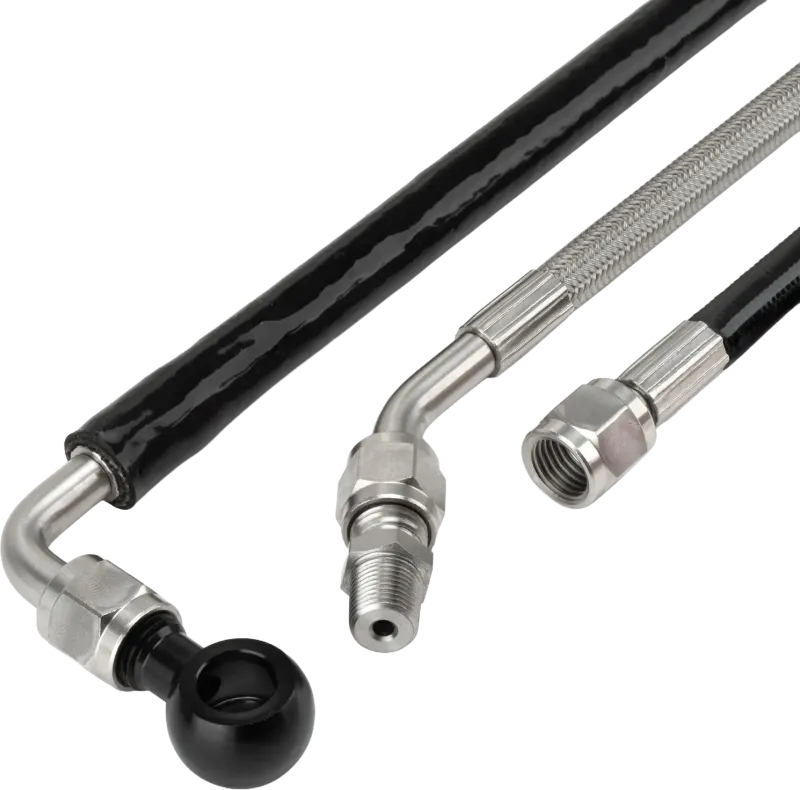
Don't be surprised if your new clutch hose looks smaller than the original. AN3 PTFE braided hose is the modern standard for hydraulic clutch systems, offering excellent pressure capability, minimal expansion and a firm, consistent clutch feel in a slimmer, lighter package. Why is AN3 used for clutch lines?
Hose Construction
- Inner Material
- PTFE Excellent chemical and temperature resistance
- Outer Material
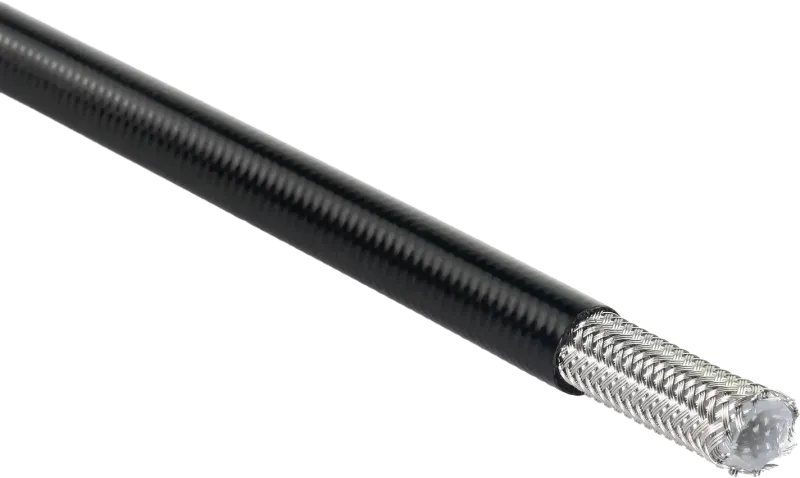
- Stainless Steel Braid Protected by a wipe-clean transparent or coloured PVC cover
- Bore Type
- Smooth Bore
- Conductive
- No Non-conductive PTFE liner
Fittings
- Material
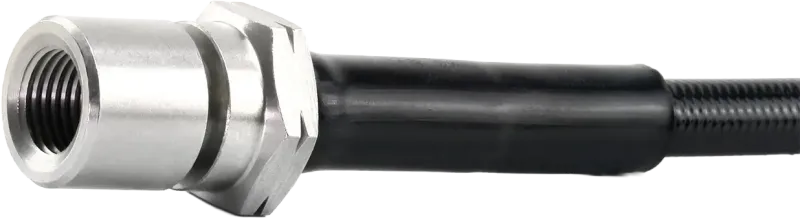
- 303/304 Stainless Steel Excellent strength and durability
- Finish
- Natural Stainless Steel Corrosion-resistant
- Manufactured In
- United Kingdom Precision CNC machined
Pressure & Temperature
- Maximum Operating Pressure
- 4,200 PSI 290 bar
- Burst Pressure
- 12,600 PSI 869 bar
- Operating Temperature
- -70°C to 250°C -94°F to 482°F
Assembly
- Assembly Method
- Hydraulic Swage Creates a permanent, leak-free connection
- Quality Check
- Ready to Fit Every hose is individually inspected before dispatch
- Reusable Fittings
- No Designed to remain permanently assembled for long-term reliability
Additional Details
- Hose Weight
- 71g Per metre of hose
Common Applications
- Clutch Lines
- Hydraulic Clutch Systems
- Motorsport Clutch Systems
- Pedal Box Systems
- Hydraulic Pressure Lines
- Pressure Gauge Lines
- Pressure Sensor Lines
Compatible Fluids & Gases
- Clutch Fluid
- Brake Fluid
- Hydraulic Oil
Lifetime Warranty
- Free repair or replacement for the lifetime of the product. Learn more
-
Do stainless steel clutch lines improve the clutch?
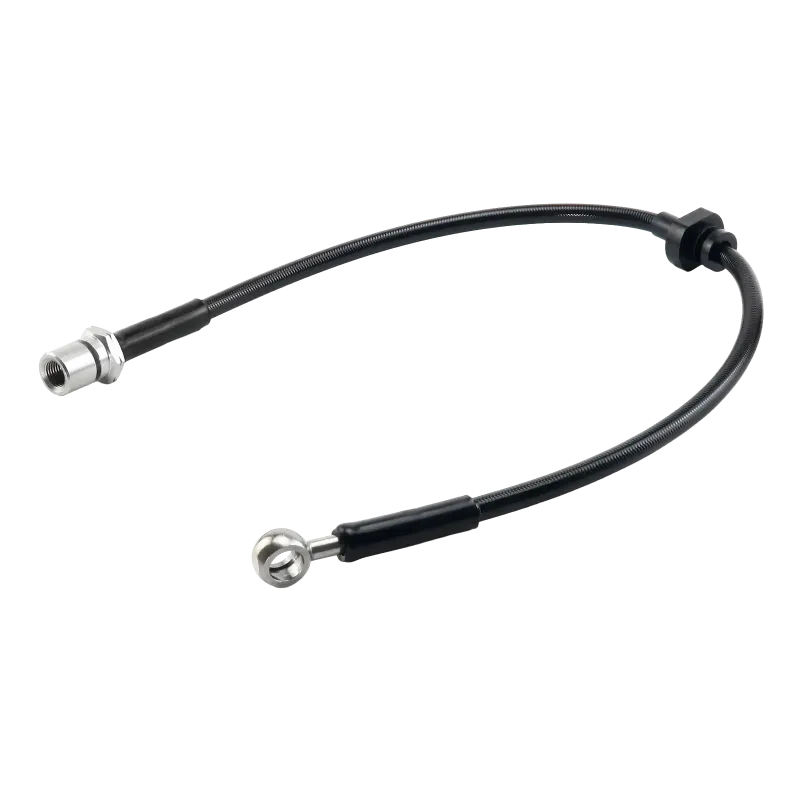
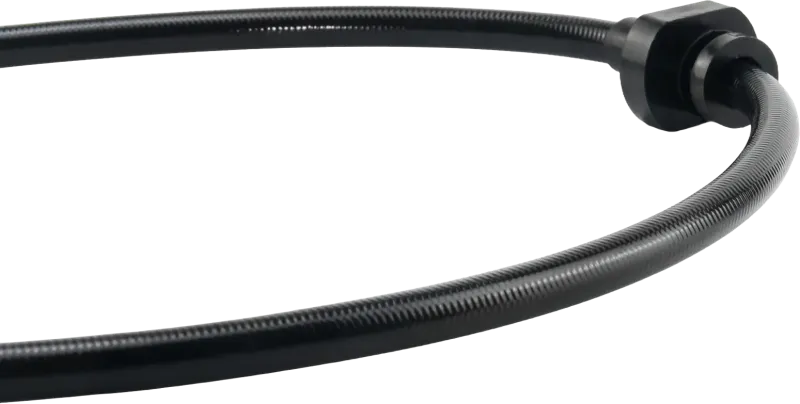
Our custom clutch lines have a strong PTFE core which is wrapped in multiple layers of stainless steel braiding. Then to finish, the stainless steel braid is coated in a durable, wipe-clean PVC coating. This 3-layer hose design greatly reduces expansion under pressure, ensuring consistent and precise clutch control.
Rubber clutch hoses get spongy and soft over time, so they can expand during hard clutch use, which often results in them feeling sluggish. Our stainless steel braided lines stay strong for a lifetime.
-
Are your custom clutch lines covered by a lifetime warranty?
Yes, our custom clutch lines include a lifetime warranty. This lifetime warranty covers any defects in materials or workmanship. You will not find a better hose warranty elsewhere.
-
Can I return or exchange my custom clutch line?
Yes, we offer a 100-day hassle-free returns policy for custom clutch lines. We know mistakes can happen and we want to make sure you are completely satisfied. However, please double-check your clutch hose before ordering to avoid any silly mistakes, it does cost us to replace them!
-
How to make custom clutch lines?
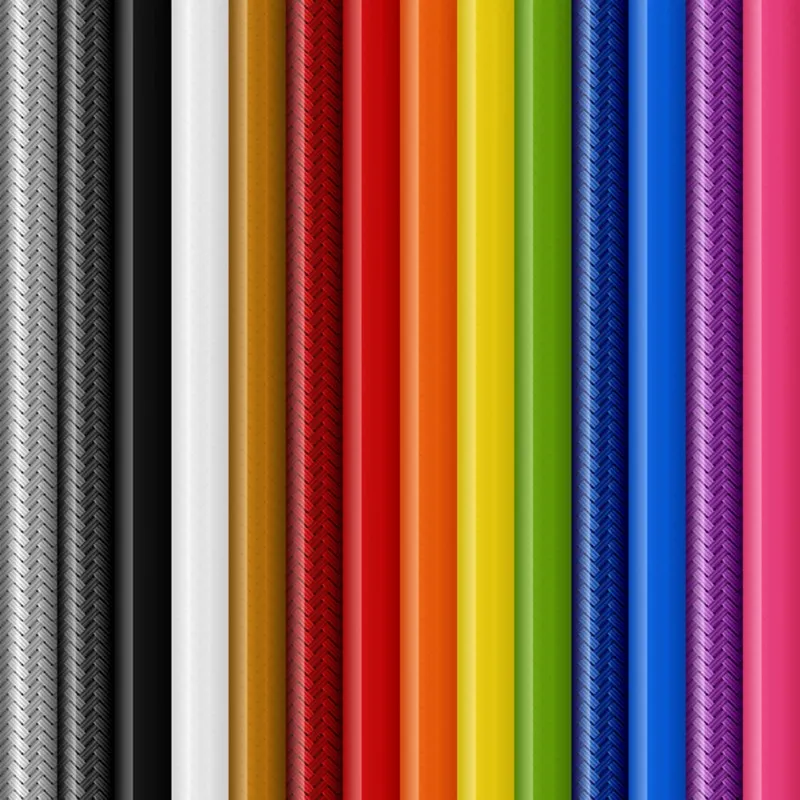
Our custom clutch hose builder makes designing your own hoses a breeze. Simply choose your hose fittings, followed by thread size and angle. Then choose your braided hose colour and add a maximum of three supports or brackets on each hose. Finally, choose your hose length and we'll start assembling your hoses as soon as we receive your order.
-
How do I measure custom clutch hoses?
The easiest way to measure your custom clutch hoses is with a piece of flexible wire or sturdy string. Make sure you go around all objects and follow all curves to make sure you don't measure the hose too tight, or the hose will be stretched when you fit it. You need to measure from the ends of male or female fittings and from the center hole of banjo fittings. Refer to the two vertical lines on the hose builder diagram when building your hoses.
When measuring motorcycle clutch hoses, make sure the wheel is off the ground so the suspension is fully extended.
-
Will these custom clutch hoses improve clutch pedal or clutch lever feel?
If you're replacing rubber clutch hoses for stainless braided, you will likely notice a big improvement in clutch pedal or clutch lever firmness and the clutch will be sharper. Perform a complete clutch fluid change at the same time for the biggest improvement.
-
Where are your stainless steel clutch fittings made?
Our stainless steel clutch fittings are made from scratch in the United Kingdom. The fittings are manufactured from high-quality raw stainless steel bar. By keeping production local, we can keep a close eye on quality control.
-
How are your clutch fittings attached to the hose?
We use an industrial swaging machine to crimp the fittings to the stainless steel hose. Once we've crimped the fittings to the hose, they won't be coming off! We've even seen a motorcycle crash where the only thing keeping the wheel attached to the motorbike were the hoses! We've seen other clutch lines that use reusable fittings, which aren't road legal in the UK.
-
Are your stainless steel braided clutch lines road legal?
Yes, our custom braided clutch lines are certified for use worldwide, meaning you can use them on any road around the globe. Please take a look at the certification section below, where you'll find a complete list of our global certifications and compliance standards.
-
How do I maintain and clean braided clutch lines?
Our custom clutch lines are made with rust-resistant stainless steel and are coated in a wipe-clean PVC coating, requiring minimal maintenance. To keep them in optimal condition, occasionally spray them with your favourite degreaser and wipe the hoses down with a clean cloth. Other than cleaning the hoses, they're virtually maintenance-free.
-
Are your custom clutch lines compatible with my vehicle?
Our custom clutch lines are compatible with all cars, motorcycles and commercial vehicles. If you need assistance when building your hoses, please contact us. We have a database containing specifications for over 10,000 cars and motorcycles. We also have 15+ years of experience in manufacturing braided clutch hoses, we've seen it all!
-
Are your custom braided clutch hoses suitable for track use?
Our custom clutch lines been tested and trusted at the highest levels of motorsport, including British Touring Cars, Drift Masters, British Superbikes and the Superbike World Championship.
-
Do your custom braided clutch lines come with any installation instructions or support?
We don't provide installation instructions as the clutch hoses are custom-made products, intended to be installed by a professional or competent person. If you run into any issues during installation, please contact us, and we'll be happy to offer advice.
-
Do I need to bleed my clutch after installing a braided clutch line?
Yes, when replacing a clutch line, whether it's stainless steel braided or rubber, you will always need to bleed the clutch system. We recommend making a complete clutch fluid change at the same time. Even with a bog standard DOT 3 or 4 fluid, you should notice a significant clutch improvement when fitting a stainless clutch line. Our custom braided clutch hoses are compatible with all clutch fluids.
-
How often should you replace a rubber clutch hose?
We recommend that you replace a rubber clutch hose every 5 years. Although, you should check regularly for any cracks, bulges or leaks as they might need replacing before then. When you replace a rubber clutch hose with our stainless steel hose, you shouldn't have to replace it ever again. However, we still recommend that you make regular checks on the custom clutch line like you would with any other vehicle component.
-
Why upgrade to custom stainless steel clutch lines?
If you're looking for a reliable upgrade to improve your clutch system, custom stainless steel clutch lines are an excellent, affordable choice. By replacing tired rubber hoses with high-quality stainless braided lines, you'll benefit from greater clutch consistency, durability, and enhanced clutch performance in all driving conditions.
-
Why don't stainless steel clutch lines come as standard on a vehicle?
Actually, when maximum clutch performance is needed, some performance cars and motorcycles do have stainless steel braided lines as standard. Most of the time, it's a cost-cutting exercise from the manufacturer when clutch performance isn't a huge issue. A brand new rubber clutch hose does the job for a while, but it wears down over time so it's a serviceable item, just like a clutch.
-
Why might I need a custom clutch line?
-
Master cylinder, slave cylinder or gearbox change
If you've modified, replaced or upgraded your master cylinder, slave cylinder, or gearbox, you might need a custom clutch line to ensure a proper fit.
-
Hard line replacement
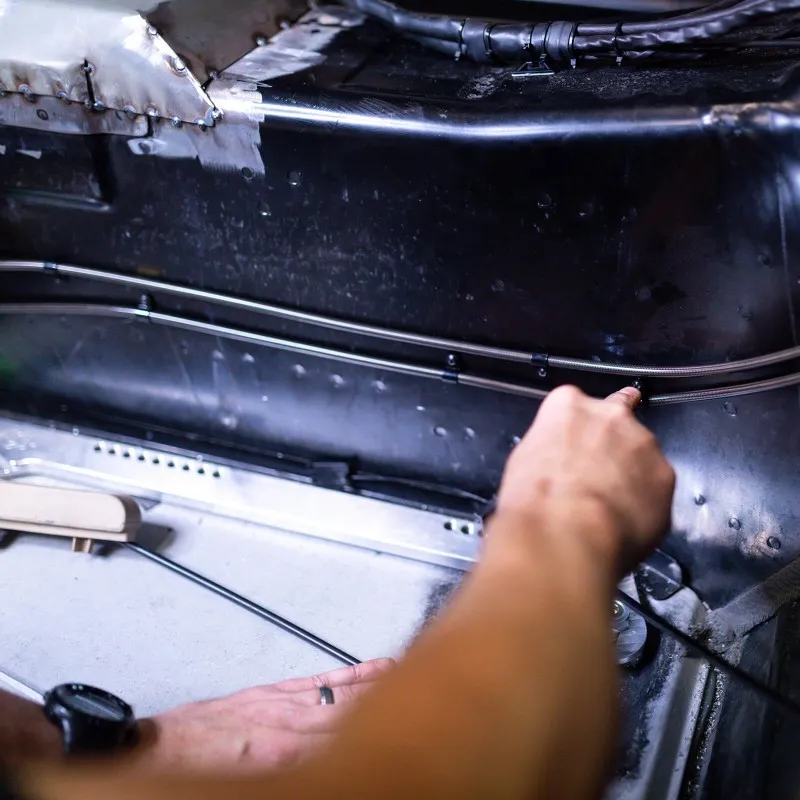
When upgrading or replacing your clutch line, many people choose to replace the entire hard line with a flexible braided line. A new one-piece clutch line reduces the number of potential failure points and may also offer better routing. This conversion is commonly known as a full length master to slave clutch line.
-
Discontinued parts
For older vehicles, it's common for the manufacturer to discontinue clutch hoses which make them hard to find, and we definitely don't recommend buying used rubber hoses! Custom flexible clutch lines offer an ideal replacement, ensuring your vehicle remains roadworthy, and in most cases, our stainless hoses outperform the original rubber hoses in every single way.
-
Cheaper than rubber
Our custom braided clutch lines are often more cost-effective than traditional rubber hoses. With the added benefits of better performance and durability, this makes custom clutch lines the obvious choice.
-
Master cylinder, slave cylinder or gearbox change
-
What is AN3?
AN3 is a hose size that's most suited to clutch systems and the size we use for all our custom clutch lines. Compared with an original rubber clutch hose, you might be wondering why our hose has got a smaller external diameter, this is because we don't need overly thick rubber to keep hose expansion down. The high-performance PTFE core and stainless steel braiding on our custom clutch hoses do a much better job than rubber so the materials don't have to be as thick.
Customer reviews
Hand-picked parts and components based on what you're viewing - perfect pairings to help you get the job done.

from£3.30

only£1.93
only£1.09
only£1.09
only£132.29
from£33.06
from£33.06
only£0.87
from£33.06
from£2.20
from£0.22